

The county’s grape harvest started on July 16, weeks ahead of anything in recent memory. Kenwood’s weather figures show why, and growers expect a small crop.
The first wine grapes of the 2026 vintage came off the vine in Sonoma County on Thursday, July 16. They were Pinot Noir from Dutton Ranch’s Jewell Vineyard at Graton, bound for Schramsberg’s sparkling wines. Steve Dutton, who has farmed here for four decades, called it the earliest pick in that time. “This is by far our earliest pick—and completely unexpected,” said Schramsberg’s viticulturist, Samantha Rubanowitz.
The harvest is being called the “earliest in forty years,” but that figure is one grower’s career, not an archive. Karissa Kruse of Sonoma County Winegrowers says only that it is “the earliest harvest I’ve experienced during my time” with the organization. Nobody has produced a dated series going back further, so this paper calls it the earliest in living memory.
What happened here, in the valley’s own numbers
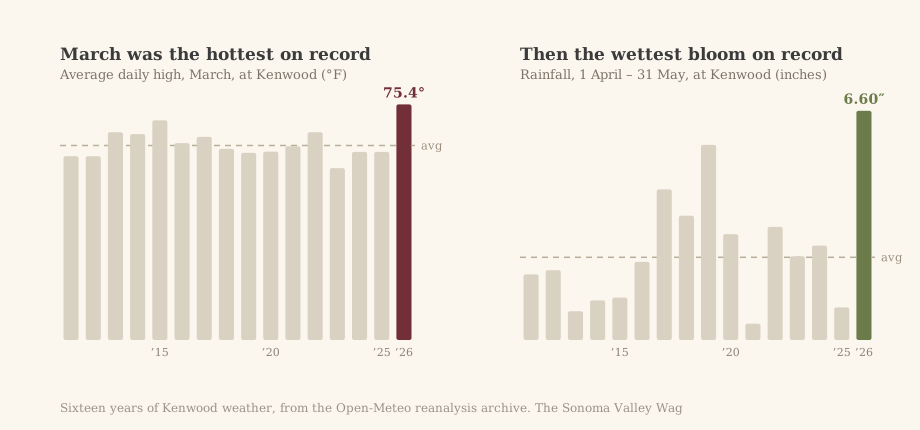
The countywide explanation is a hot March that pushed bud break early, followed by a cold, wet bloom that ruined pollination. Kenwood’s weather record bears out both the hot March and the wet bloom.
March 2026 was the warmest in the 16-year record at Kenwood by a wide margin. The average daily high was 75.4°F, against a 2011–2025 mean of 62.2°F, which put it 13 degrees above normal and five degrees above the next-warmest March on the list. The hottest day reached 87.6°F.
The bloom window was the wettest in the same record. Between April 1 and May 31, Kenwood took 6.60 inches of rain over 14 wet days, against an average of 2.38 inches over seven and a half. Nearly three times the normal rain fell just when the flowers needed still, dry weather to set fruit. The result, growers across the county report, is undersized clusters with fewer berries in them.
The vines started early, then had less fruit to ripen, so they ripened faster still. The Graton grapes reached 20 Brix by July 15. “The harvest will start early and ripen quickly,” said Tyler Klick of Redwood Empire Vineyard Management.
A small crop
Schramsberg took 12 tons off the Jewell Vineyard, about 35% below its average. In Alexander Valley, Bret Munselle expects Cabernet yields of “around 50-60% of our historic averages.” In Carneros, Steve Sangiacomo of Sangiacomo Family Vineyards says: “Yields will be on the light side.” Kruse expects the county to come in 35% to 50% lighter than normal.
North Coast growers went into this season with tepid demand and contracts under pressure, so a light crop cuts both ways. Fewer tons matter less in a year of oversupply. Small berries also concentrate flavor, and that is why the trade’s public line is about quality. For a grower paid by the ton, it is still a thin year.
What it means in Kenwood and Glen Ellen
The first picks were Pinot Noir and Chardonnay for sparkling wine, from the Russian River Valley and Carneros, which come in first every year. Of the 37 wineries in Kenwood and Glen Ellen in our directory, 24 list Cabernet Sauvignon, more than any other grape. Chardonnay and Pinot Noir follow on 21 each, then Syrah and Zinfandel. Cabernet ripens late, so the valley’s signature harvest is still ahead, and it will be early rather than the earliest.
Taylor Serres of Serres Ranch, in Sonoma Valley, sounds calmer than the county headline, describing “mild temperatures, ample soil moisture, and strong canopy growth” through the season. Serres calls those conditions favorable. An early harvest can still be a good one, even if it arrives before the equipment, the crews and the tasting-room calendars expect it.
For anyone who lives here, the trucks and night-picking crews are on the roads sooner than usual. Highway 12 and the smaller lanes will carry gondola traffic through what is normally still high tourist season. Harvest events on the Social Calendar may run ahead of their usual dates, so check before you drive.
Sources: the Sonoma Index-Tribune’s account of the first pick (July 16, 2026); the Sonoma County Winegrowers’ harvest release (July 24, 2026) for grower quotes and yield estimates. The Kenwood weather figures are our own, calculated from the Open-Meteo reanalysis archive for the Kenwood gridpoint, 2011–2026. There is no ground-level weather station in Kenwood, Glen Ellen or Oakmont, so these figures are modeled rather than measured. Grape counts are from our winery directory.